
Technology
Nuclear, built like a product.
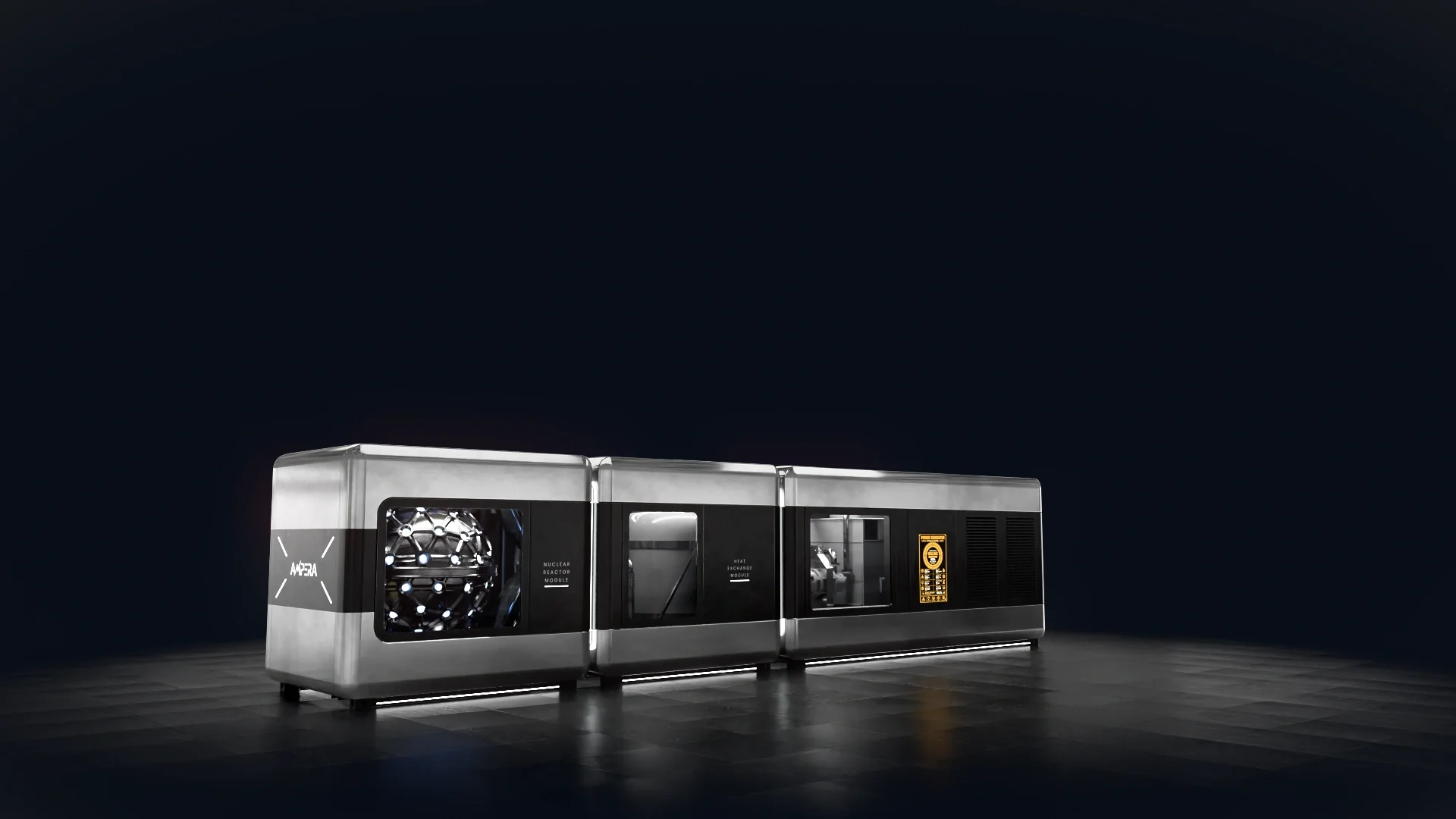
An integrated neutron driver supports subcritical operation of a thorium-fueled breeder system. Safety built into the physics.
The first full-scale 3D-printed nuclear reactor module.
A compact 4.5 ft core with shielding, built around a proprietary gyroid structure with microchannels. Solid state. No criticality, no refueling.
Subcritical architecture
The core cannot sustain a chain reaction on its own. It needs an external source to breed, so it turns on and off instantly and is passively safe.
Accelerator driven
An integrated neutron driver, a high-yield neutron generator, sustains subcritical operation.
Spherical monolithic core
One printed part, sealed at the factory. No fuel handling and no spent-fuel systems on site.
Xenon-transient resilience
Designed for immediate restart capability, without the xenon-poisoning wait that limits conventional reactors.
Abundant. Low cost. Safe.
Fertile thorium TRISO particles, made by a proprietary liquid-metal jetting process, are designed for a target of up to 30 years of operation without refueling. Natural thorium needs no enrichment, reduces safeguard requirements and minimizes proliferation risk.
sPower: supercritical CO2, field proven.
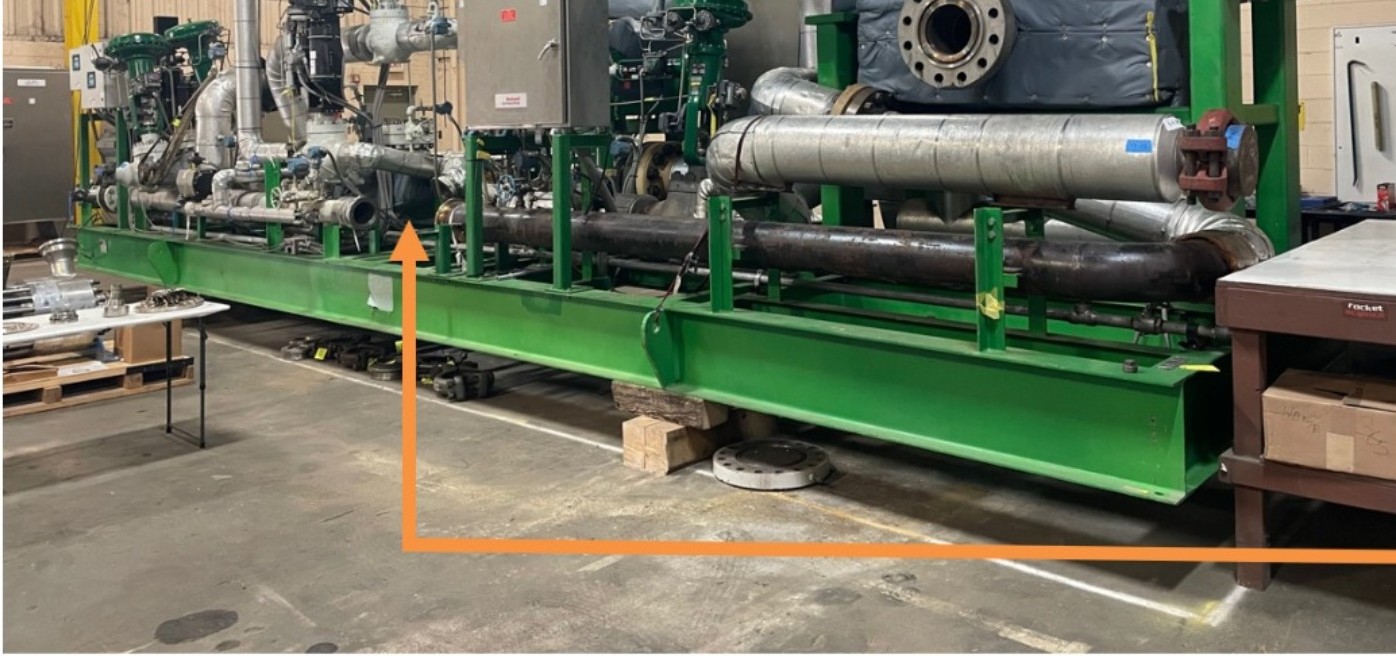
Closed-loop sCO2 Brayton-cycle power: compact equipment, rapid startup, water-free operation, lower energy cost. AMPERA acquired a world-leading sCO2 system built on 20 years of R&D.

- Dimensions
- 36 × 11 × 12.5 ft
- Weight
- 115,000 lb
- Cycle
- Simple cycle, split process and power turbomachinery, 2 recuperators
- Turbopump TIT
- 375°C
- Compressor outlet
- 250 bar
- Operating data
- Thousands of hours, accelerated lifetime testing
Additive manufacturing runs through the whole stack.
Printed heat exchangers
3D-printed primary heat exchangers, micro-turbines and combustors cut size by half.
Superalloy deposition
Special nickel superalloy deposition methods resist CO2 corrosion at high temperature.
Printed fuel
Liquid-metal jet printed TRISO kernels for the thorium fuel.